

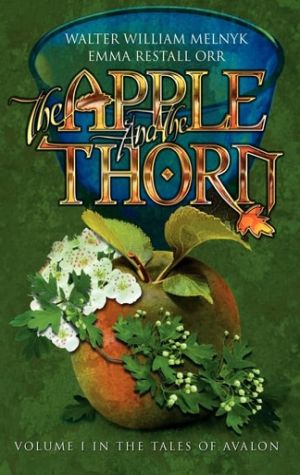
Second Edition This story is not true in the sense that most people use that word. It emerges out of the mists of time, rooted deep in the heritage of Britain and western spirituality. It is a weave of mythologies, theologies, traditions, and histories. The story stands upon the traditions of two mythical characters: the Lady of Avalon, and Joseph of Arimathea. But the land is itself a living character in the tale, as is the surrounding marsh, the invading Roman legion, and a very special cup of blue glass that unites them all. The legend of the Lady emerges from the great body of Arthurian literature, but predates and underlies the story of Arthur by some four hundred years. Vivian is a Lady who is already the stuff of myth by the time Arthur meets the Lady of the Lake. She is the sovereignty of the land itself, the spirit of the mud and dark water of the marshes, seer of an ancient people, priestess of the Isle of Mist, and keeper of the apples. She clings to the ancient earth for her people at a time when the old Druids are finding new connections to a Roman culture they are no longer able to defeat. At the time of the tale, which we would today name as circa 45 CE, the Roman invasion under Emperor Claudius is two years old. Vespasian is leading the II Augusta Legion across the southwest of Britain, fast approaching the great inland sea, which is the realm of Avalon. Ancient Britain will soon be Roman. Into this ferment comes Joseph of Arimathea, great-uncle of Jesus of Nazareth. Traditions of Joseph abound in the Cornwall and Somerset regions of England; Joseph, the Cornish tin and lead merchant, mine owner and supplier of metals to the Roman military across the Empire. In this tale we make use of one particular tradition that says Joseph was indeed born in Cornwall, a Jew of the Diaspora, and only later went to Palestine in his capacity of trader in tin. There he became Minister of Mines for the Roman army, a worldly-wise merchant who knew the Mediterranean world, and much of the Roman leadership. In this tale, he is known by a Cornish-inspired name, Eosaidh (Yaw'-sheh) of Cornualle, or Eos (Yawsh). According to tradition, Eosaidh made many trips from Palestine to the mines of Cornwall and the Mendip hills north of Avalon, and on some occasions brought his nephew with him. Eosaidh, Vivian, and "the lad" have all met before, years before this tale begins. And Vivian has already had profound, but different, influence upon them both. The underlying images in the tale are the Cup of Life, later to become known as the "Holy Grail," the Apple trees of sacred and fertile Avalon, and the Hawthorn staff of Eosaidh's tradition. It is a tale of the coming of the Jesus tradition to the ancient world of Avalon, and what happens when these worlds collide. But there is unexpected conflict, too, when Eosaidh is confronted with the new "church," bringing a cult of Jesus that even he cannot accept. In the end, Eosaidh must chose between Avalon and Jerusalem, between two loves. And this is truly a love story, for the worldviews that meet, and clash, and dance and clash again do not do so in the abstract. Eosaidh and Vivian are flesh and blood. Their struggle to understand one another, and indeed themselves, takes them out of the realm of theological debate into the whirlwind of human emotion. What would be a work of theology becomes instead the most powerful of love stories. And this is as it should be. This second edition contains no changes in the story line. But numerous typographical and formatting problems in the original have been corrected. The reader will find this edition an easier read, especially in discerning the shifts in time and space. The original edition contained an epilogue, which does not appear here. Upon consideration, we felt the epilogue did not add to the original tale, and indeed tended to detract from it. In this edition, the tale ends where it should.
2011
296 pages
Over the past few hundred years, animism has been dismissed as a primitive, naive and irrational perspective, relevant perhaps amongst tribal peoples but not within the intellectual arenas of the civilized West. In this book, the author argues that this is based on the misrepresentation that each tree and stone has its own immortal soul.
2012
313 pages

Kissing the Hag by Emma Restall Orr is based upon the old tale of The Marriage of Sir Gawain, and carries us from girlish innocence through to the nauseating horror of the hag - the raw side, the dark side, the inside of a woman's.
2012
240 pages
Living With Honour is a provocative and uncompromising exploration of how Paganism can provide the philosophical guidance to live honorably in a twenty-first Western society. Part One explores the history of Paganism, its undercurrents of anarchy, heresy, environmentalism and animism, finding its place within the history of Western philosophy. Part Two addresses key moral issues from that animistic perspective, beginning with the foundation of human relationships and attitudes towards the Other. It book explores how we value life, and firstly human life, looking at dying, suicide and euthanasia, birth, abortion and IVF. It then examines the human abuse of nonhuman animals, discussing sentience, personhood and inherent value. Finally, it focuses on current global crises, exploring need as opposed to desire.
2008
360 pages
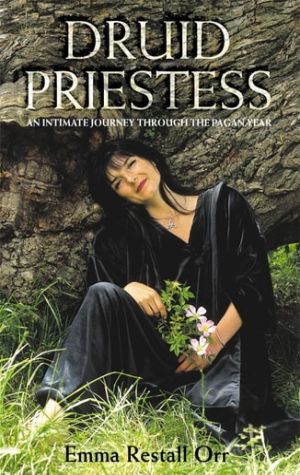
Forget the images of white-robed figures involved in esoteric ritual - modern druidry is not wrapped in a veil of secrecy but celebrated openly in the sunlight of a meadow or the shady leafiness of a forest glade. Druids are passionate about the environment, and their worship is above all focussed on Nature through the celebration of the changing seasons of the year.
2001
256 pages